History

Volumes · The Horned Sea

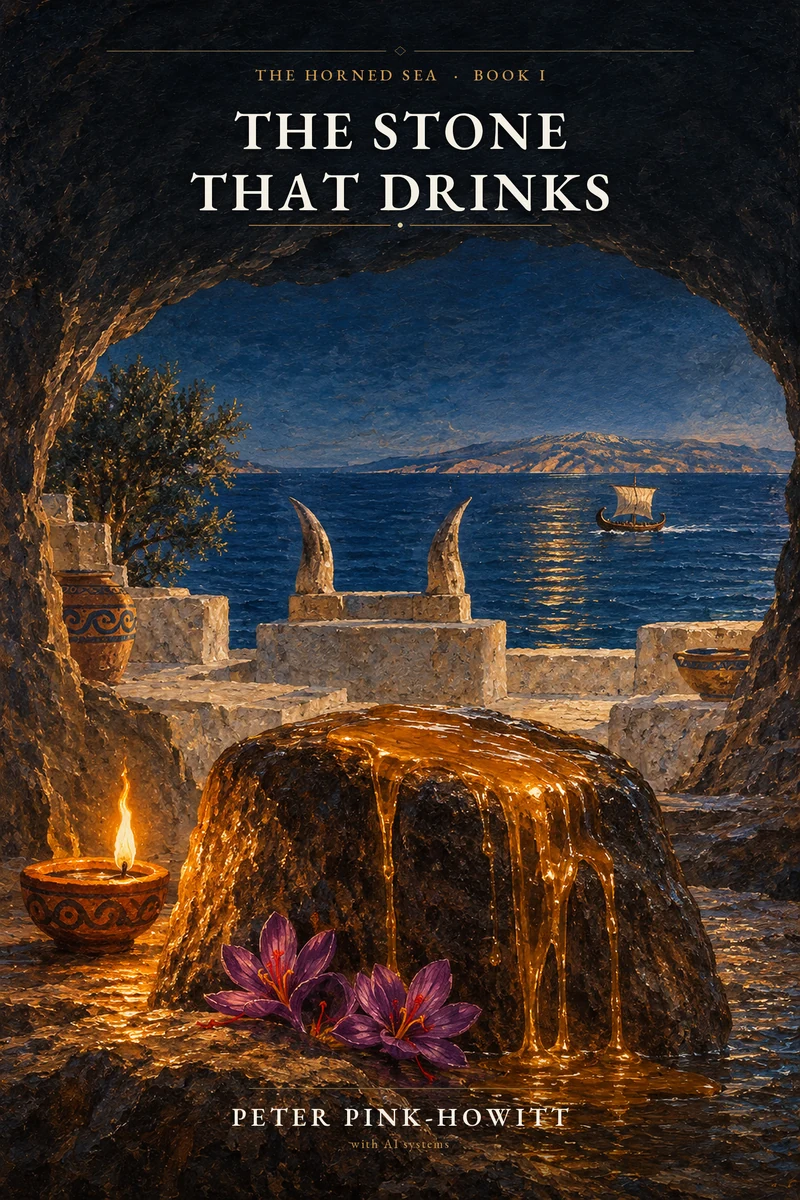
Cover for Book I: The Stone That Drinks

Book I: The Stone That Drinks 16+

Volume I (Late Minoan IA, c. 1610–1525 BCE, disputed · Crete and the Round Island · 302 pages). Years ago, in a river-mouth cave on Crete, a midwife saved a mother’s life with a vow: a child of that womb for the Lady’s court. Now the son is a bull-leaper in gold, and when his partner is gored he runs, out across the water to a ship bound for the Round Island, where a young murex diver hauls him aboard by the hair. The island says a life pulled from the sea belongs to the house that pulled it. Crete says the vow must be paid, by the boy or by his younger sister. A wall-painter, a diver, a midwife and a shepherd carry the quarrel across one year on two islands, while the ground under the Round Island begins to stir.
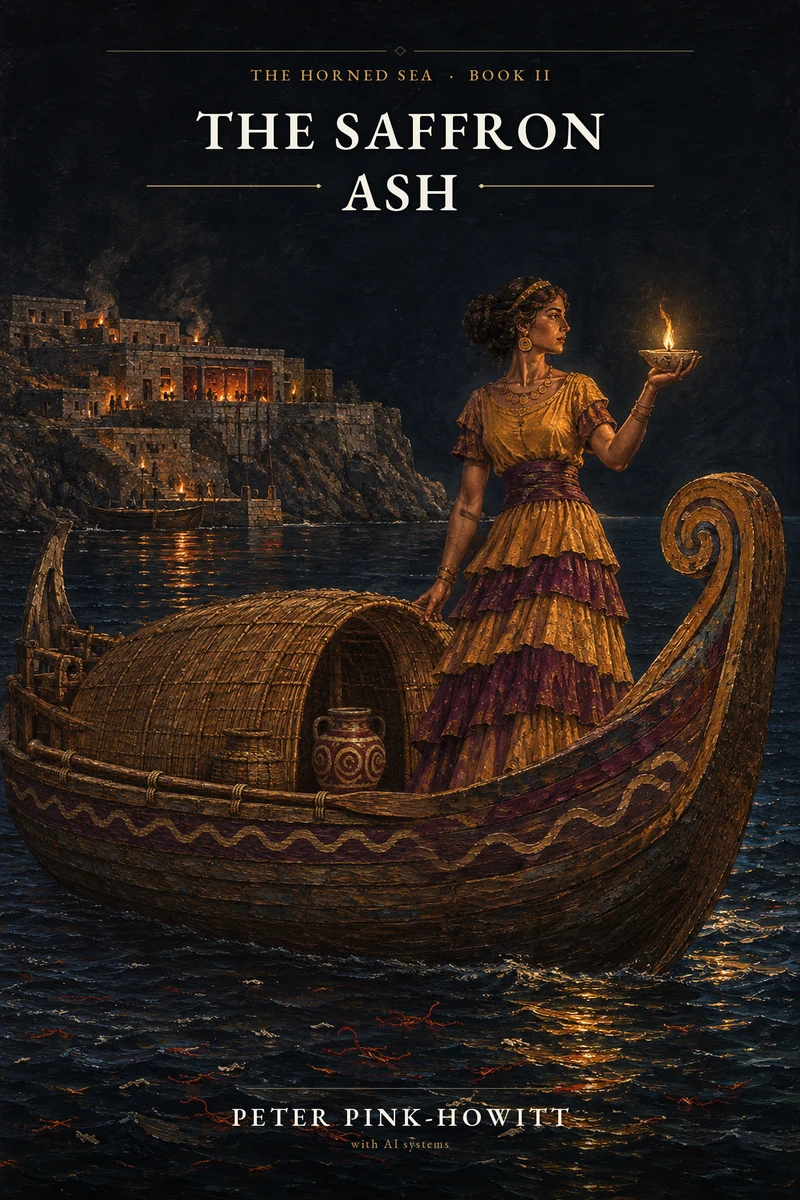
Cover for Book II: The Saffron Ash

Book II: The Saffron Ash 16+

Volume II (c. 1455–1435 BCE · Crete · 254 pages). Several generations after the Round Island was abandoned, fires burn the towns and great houses of Crete while Knossos stands. Mainland lords take the court, and their clerks begin writing Greek in the old Cretan signs. Across twenty years four people live by the count: Tukhana, who seals saffron and copper in the eastern palace at Zakros; Widamata, a dye-vat hand who learns to flatten clay for the new scribes; Klumenos, a mainland chariot officer who will not act on one man’s word; and Alasios, a harbour pilot who always knows the way out to sea.

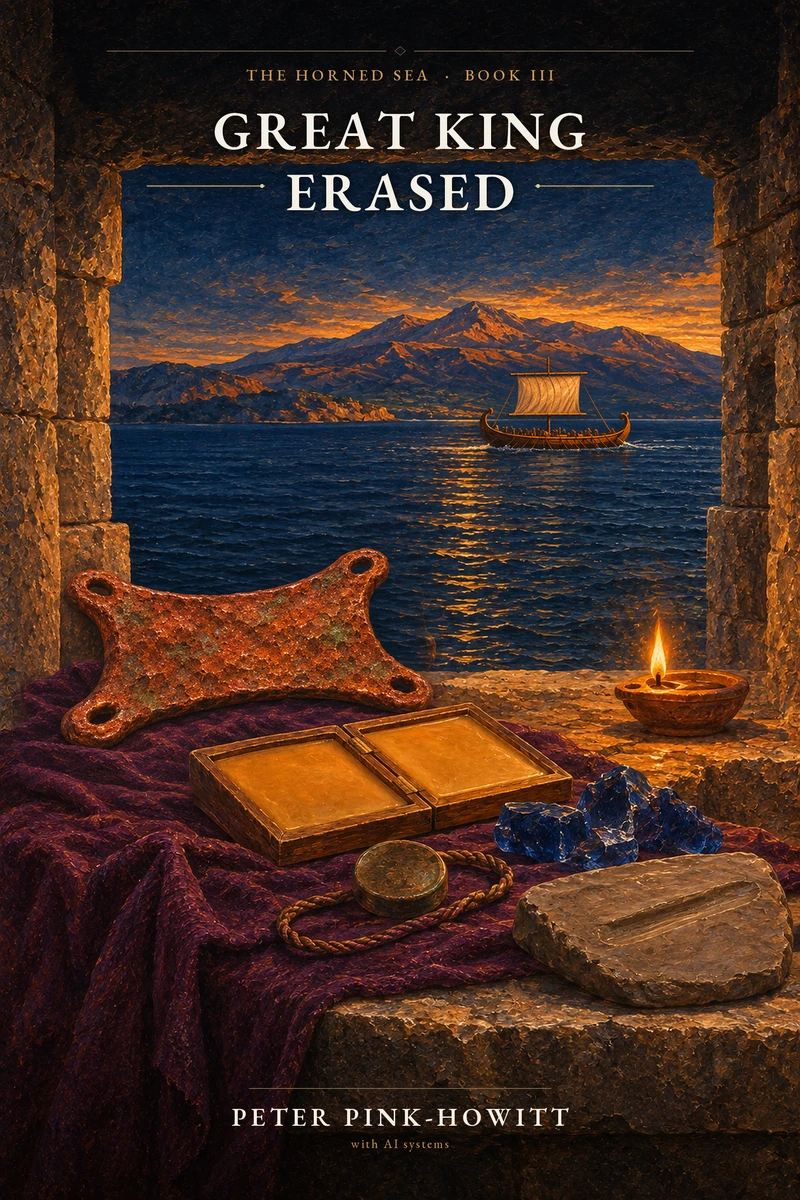
Cover for Book III: Great King Erased

Book III: Great King Erased 16+

Volume III (c. 1240–1225 BCE · Millawanda, Hattusa and Pu-ro · 238 pages). In the dyers’ lane of Millawanda, on the Anatolian coast, Risura’s house pays an extra bale of wool every New Year so that its daughters are never written on anyone’s clay. Over fifteen years the great powers redraw the town around her: the Hittite king’s men come through the gate, a renegade prince slips away by night with captives under his rowing benches, and a seal-keeper named Zamnawiya watches a scribe in Hattusa smooth a king out of a treaty while the clay is still wet. Across the sea at Pu-ro a village smith, Dautaros, weighs the palace’s bronze, and between the two coasts a fifty-oar mate, Loukos, carries whatever pays.

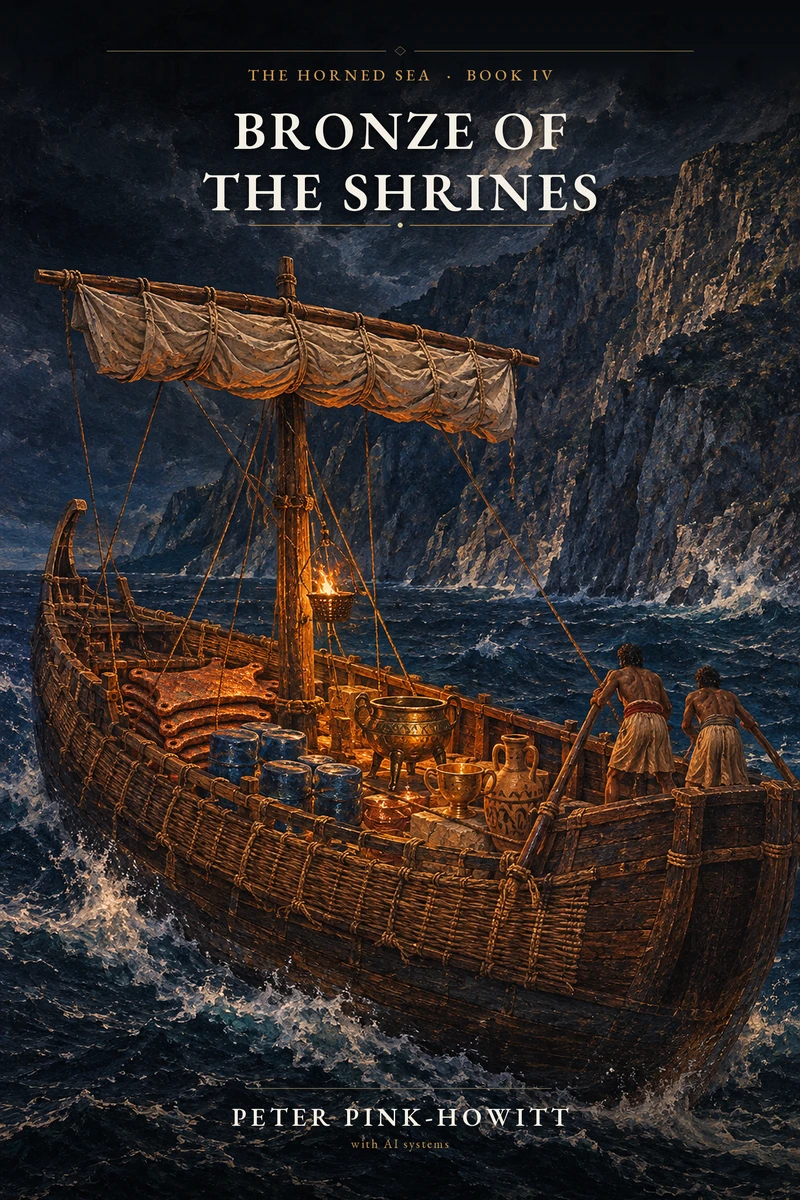
Cover for Book IV: Bronze of the Shrines

Book IV: Bronze of the Shrines 16+

Volume IV (c. 1203 BCE · Pu-ro and its coast · 254 pages). The last spring of the palace at Pu-ro, the place now called Pylos. Risura, fifty-one and the senior woman of the weaving shed, lies about her granddaughter’s age to keep the girl off the palace’s lists. Zamnawiya keeps the wax boards of the shrine at Pa-ki-ja-ne and strikes the bargain that sends its bronze to the palace crucibles. Dautaros, a smith with no tin, takes a hammer to the votive tripod his village has known all its life. Loukos, master of a fifty-oar, fills his empty benches with weavers’ sons for a coast that cannot be guarded. The tablets the palace writes that season are the only year of the kingdom anyone can still read.

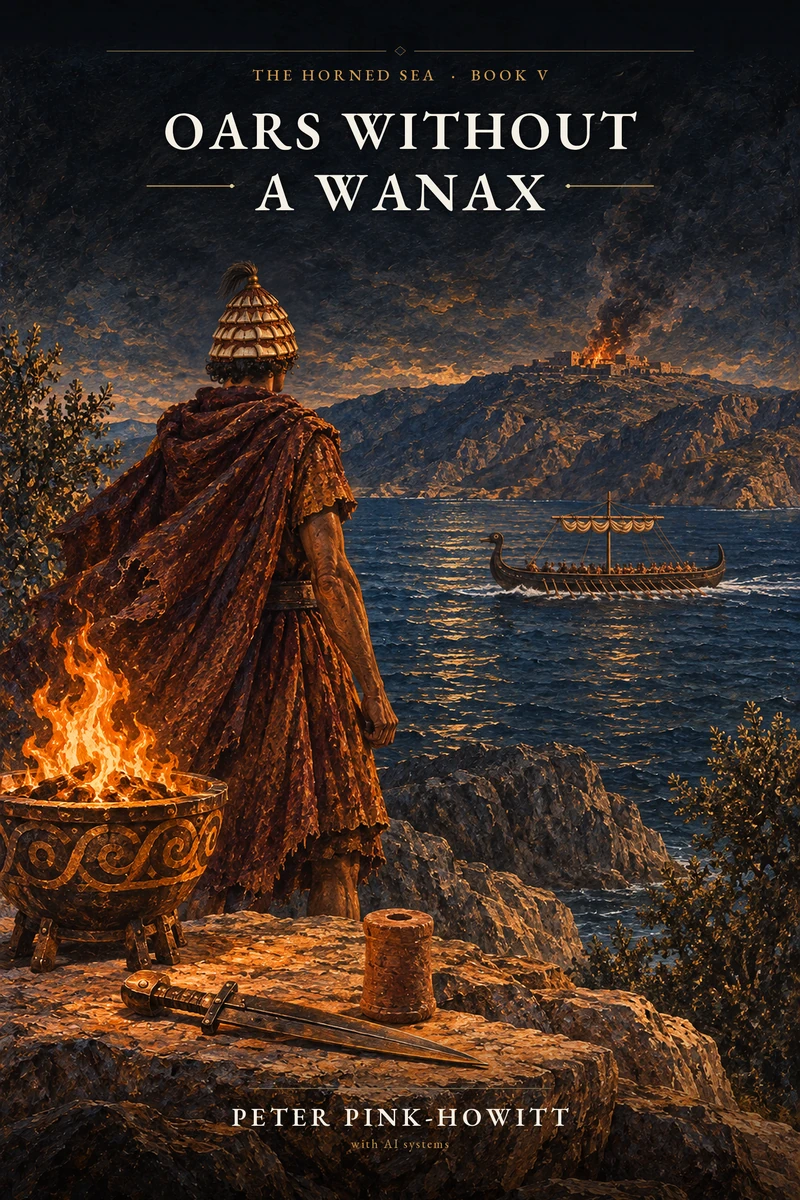
Cover for Book V: Oars Without a Wanax

Book V: Oars Without a Wanax 16+

Volume V (c. 1203–1177 BCE · Tiryns, Lukka, Alashiya, Ugarit and the Southern Levant · 318 pages). Thirteen springs after the palace at Pu-ro burned, refugees who have made a life in the lower town at Tiryns, below a narrower hall raised where the throne once stood, put their households aboard one fifty-oar hull and row east for whoever will feed them: a Hittite envoy in Lukka waiting on a short-weight cargo, the smiths of Alashiya who have learned to work black iron, the ash of Ugarit, and a walled town on the southern coast, modelled on Ashkelon, where a household of strangers learns to bake in someone else’s oven. There is no king, no scribe and no ration to come home to. What the crew keeps is a count of shares, a few seals and weights, and what they can remember.